Food Components and Health
Exploring different food groups, their nutritional profiles, and their roles in supporting health.
Exploring different food groups, their nutritional profiles, and their roles in supporting health.
Different foods provide different combinations of nutrients, fiber, phytochemicals, and other beneficial compounds. Consuming a diverse range of foods ensures a broader spectrum of nutrients and bioactive compounds.
Rather than focusing on individual "superfoods," the emphasis in nutrition science is on consistent intake of varied whole foods, which together provide nutritional completeness.
Rich in vitamins, minerals, fiber, and phytochemicals. Different colored vegetables contain different beneficial compounds, making variety important. Vegetables are nutrient-dense with relatively low caloric content.
Sources of vitamins, particularly vitamin C, fiber, and various phytochemicals. Provide natural sugars and contribute to overall nutritional balance as part of a varied diet.
Provide carbohydrates, B vitamins, fiber, and minerals. The fiber content supports digestive health and provides sustained energy release compared to refined grains.
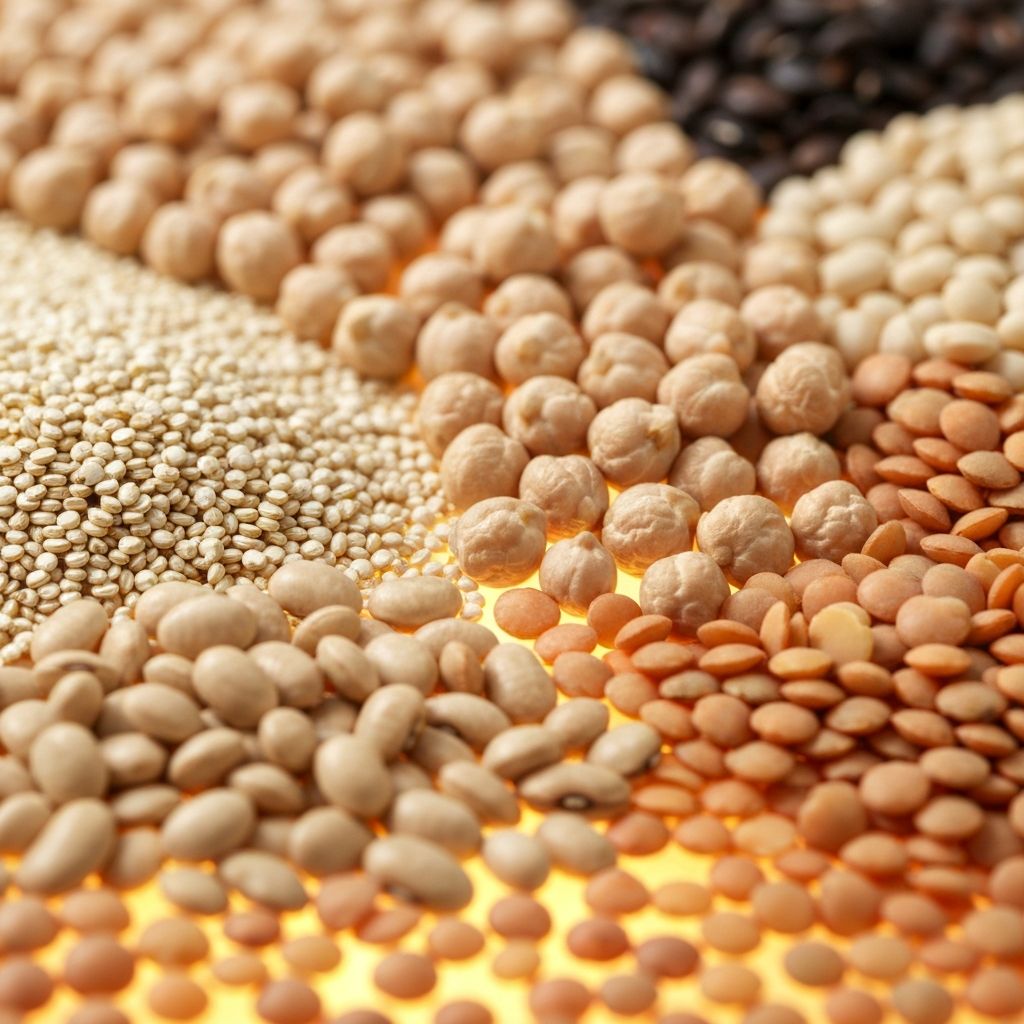
Beans, lentils, and peas provide plant-based protein, fiber, and various micronutrients. They are also cost-effective and contribute to dietary variety and sustainability.
Both animal sources (meat, fish, dairy, eggs) and plant sources (legumes, nuts, seeds) provide essential amino acids and additional nutrients. Different sources offer different nutritional profiles.
Nuts, seeds, avocados, and oils provide essential fatty acids and fat-soluble vitamins. Different sources have different fat compositions and additional nutrients.
Whole foods are minimally processed and retain much of their original nutrient composition. Processed foods have been altered from their natural state, often with additions of sodium, sugar, or other ingredients.
While whole foods are generally preferred from a nutritional standpoint, not all processed foods are "bad"—processing can preserve nutrients and make foods accessible. The key is balance and understanding overall dietary patterns.
Processing affects not only nutrient content but also satiety, palatability, and how foods are metabolized by the body. Context and overall dietary pattern matter.
Rather than viewing foods as strictly "good" or "bad," a more nuanced perspective considers:
This approach reduces the all-or-nothing thinking that often accompanies dietary discussions and supports sustainable, flexible eating patterns.
Nutritional recommendations must consider real-world contexts, including food availability, cost, cultural preferences, and individual circumstances. One-size-fits-all dietary advice often fails because it doesn't account for these factors.
Understanding your own nutritional needs and preferences is important for developing sustainable eating patterns. This information is educational and should not replace guidance from qualified professionals familiar with your individual situation.